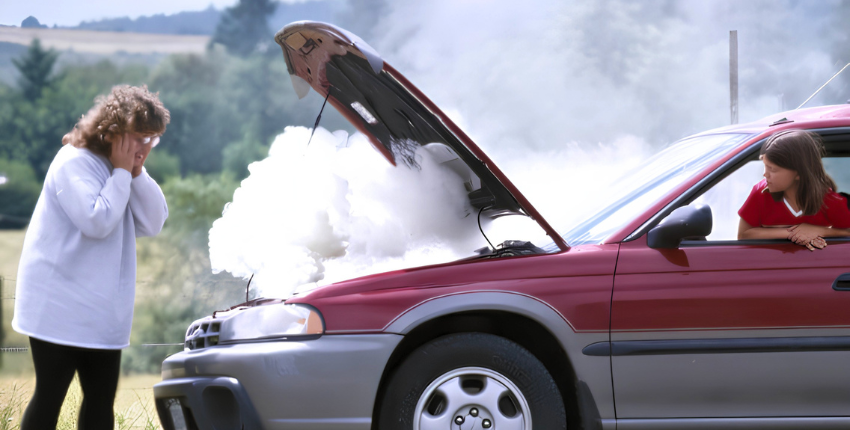
The most common reasons a vehicle overheats are low coolant, coolant leaks, a bad thermostat, water pump failure, radiator problems, or a cooling system that cannot maintain proper pressure. Continuing to drive an overheating vehicle can cause severe engine damage.
You’re driving through Sycamore or DeKalb on a ninety-degree July afternoon when you notice the temperature gauge climbing toward the red. Your stomach drops a little. Nobody plans for this, and it always seems to happen on the hottest day of the year, about two miles from anywhere you’d actually want to break down.
The good news is that an overheating engine is almost always trying to tell you something before it becomes a real disaster. The trick is knowing what it’s saying instead of burying your head in the sand and hoping it sorts itself out. Spoiler: it won’t.
Common Signs Your Vehicle Is Overheating
Before the temperature gauge hits the red, your vehicle may give you a few warning signs:
- The temperature gauge climbs above normal.
- Steam comes from under the hood.
- You notice a sweet smell from leaking coolant.
- The heater suddenly starts blowing cold air.
- An engine temperature warning light appears on the dashboard.
If you notice any of these symptoms, it’s a good idea to have the cooling system checked before a small issue turns into a major repair.
What “Overheating” Actually Means
Your engine runs best in a fairly narrow temperature range. When it gets too hot, metal parts expand, seals start to fail, and in a worst-case situation the whole engine can warp or crack. That’s the kind of repair bill that ruins a perfectly good week.
The cooling system exists to keep all that heat in check, and when something in that system quits doing its job, the temperature starts to creep up.
The Usual Suspects
Most overheating problems trace back to a handful of common culprits, and we see all of them.
Low Coolant
Coolant is the fluid that carries heat away from your engine. If you’re low, usually because of a slow leak you haven’t noticed, there isn’t enough of it to do the job.
Watered-Down Coolant
This one trips up a lot of well-meaning folks. Someone sees the level is low, tops it off with plain water from the garden hose, and figures they’re good.
Here’s the catch.
Coolant is a mix of antifreeze and water for a reason. That mix raises the boiling point well above what plain water can handle, so when you dilute it with too much water, the whole thing boils over sooner and you’re right back where you started, except now it’s steaming.
A Bad Thermostat
This little part decides when coolant flows through the engine. When it sticks shut, the coolant stops circulating and the temperature shoots up fast.
A Failing Water Pump
The water pump pushes coolant through the system. We’ve pulled pumps where the fins, the little blades that actually move the fluid, had corroded clean away. From the outside the pump looks fine and still spins, but inside there’s nothing left to push the coolant anywhere.
The engine cooks while the pump just sits there spinning like it’s on a coffee break.
A Bad Radiator Cap
People don’t think much about the cap, but it’s doing real work. It holds pressure in the system, and that pressure is part of what keeps the coolant from boiling.
A worn-out cap that can’t maintain proper pressure can allow coolant to boil sooner than it should, creating overheating problems throughout the system.
A Clogged or Leaking Radiator
The radiator is where hot coolant goes to cool off before heading back through the engine. If it’s blocked up or leaking, that cooling step doesn’t happen.
A Worn Belt or Slipping Tensioner
The belt spins the water pump, and the tensioner is what keeps that belt tight. When the tensioner wears out and goes weak, the belt slips, the pump slows down, and your cooling system takes the hit.
The belt usually gets blamed, but the tensioner is often the real culprit.
What To Do If Your Vehicle Starts Overheating
If that temperature gauge reaches the red zone, the smartest move is to pull over safely and shut the engine off.
Driving even a few extra miles with an overheating engine can turn a relatively minor cooling-system repair into a blown head gasket or even a complete engine replacement.
Let the engine cool down before you even think about opening the hood. A hot cooling system is under pressure and can cause serious burns.
Once everything has cooled, you can check the coolant level. But if you’re losing coolant faster than you can add it, call for help instead of trying to limp it home.
Why DeKalb County Summers Are Hard On Cooling Systems
Our summers here aren’t gentle.
Stop-and-go traffic around DeKalb and Sycamore, long idles in parking lots, construction delays, and that thick July humidity all make your engine work harder to stay cool.
A cooling system that limped through a mild spring can fall apart the first week it really gets hot. That’s why early summer is a smart time to have things inspected before the heat does the testing for you.
What About Electric Vehicles?
Electric vehicles don’t have a traditional engine, but they still rely on cooling systems to manage battery temperatures and other components, and those systems can have trouble too.
Good news for EV and hybrid drivers in DeKalb County: our DeKalb location now offers full EV and hybrid service. Whether you drive a gas-powered vehicle, a hybrid, or an EV, an overheating or cooling warning is never something to ignore.
We’ll Find The Real Problem
When you bring your vehicle to Bockman’s Auto, Truck & Tire, we inspect the entire cooling system as part of our Digital Vehicle Inspection process.
You’ll receive photos and findings directly on your phone so you can see exactly what we see. We’ll explain what’s going on, what we recommend, and answer any questions you have. The decision on what to repair is always yours.
Qualifying cooling system repairs at Bockman’s are covered by the NAPA Peace of Mind Warranty: 3 years or 36,000 miles, honored at over 18,000 NAPA Auto Care locations nationwide.
Frequently Asked Questions
Can I drive my car if it’s overheating?
No. Pull over safely and shut the engine off as soon as possible. Continuing to drive can cause severe engine damage.
Can low coolant cause overheating?
Absolutely. Low coolant is one of the most common causes of overheating and is often caused by an unseen leak.
Why does my car overheat when sitting still but not while driving?
This may indicate a cooling fan problem, airflow issue, or another cooling system component that isn’t working properly at low speeds.
How expensive is an overheating repair?
That depends on the cause. A thermostat, radiator cap, or coolant leak repair is typically far less expensive than repairing engine damage caused by continued overheating.
Don’t let a hot engine turn a short drive into a tow-truck afternoon
Book online → Schedule your service online
Or give us a call:
DeKalb: 112 Industrial Dr. | 815-754-4200
Sycamore: 2158 Oakland Dr. | 815-756-7413
About the Author
Jon Bockman has owned Bockman’s Auto, Truck and Tire since 1999, continuing what his father Charlie started in DeKalb County in 1964. Named NAPA Shop of the Year (from 18,000+ centers) and voted Best Auto Repair in Daily Chronicle Readers’ Choice 15 times. Two locations, 24 employees, one goal: treat every customer like a neighbor.