Every fall it’s the same thing around here. The first morning it drops into the teens, a whole bunch of batteries that limped through the summer just quit. Somebody’s standing in their driveway in Sycamore with a coffee in one hand, wondering why the car that started fine yesterday won’t even click today.
Winter doesn’t really break your car. It just finds whatever was already on its way out and finishes the job.
Here’s what I’d look at on my own car before the snow shows up. A lot of it you can check yourself in the driveway in ten minutes. The rest is quick for us to look over.
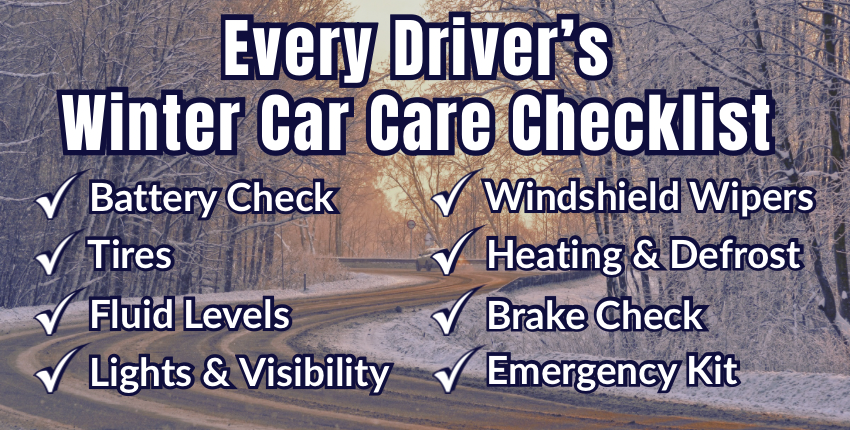
Start with the battery
If you only do one thing on this list, do this one.
Cold is brutal on a battery. It slows down the chemistry inside that makes the power, so on a zero degree morning your battery has way less to give. And that’s the exact moment your engine needs the most help, because cold oil is thick and the engine is harder to turn over.
Most batteries last somewhere around three to five years. If yours is in that range and nobody’s tested it lately, get it tested before it gets cold. A battery can seem totally fine in September and be one cold snap away from done. It just works until it doesn’t.
While you’ve got the hood up, look at the battery posts. That white or bluish crusty stuff gets in the way of a good connection. Clean it off.
Then the tires
Tire pressure drops about one pound for every 10 degrees. Set your tires on a 70 degree day and by a 10 degree morning in January you’re running about six pounds low without touching a thing. Low tires grip worse, wear funny and cost you gas mileage.
Check them about once a month when it’s cold, first thing in the morning before you drive anywhere. The right number is on the sticker inside your driver’s door. The big number on the side of the tire is the max, not what you want.
Tread matters even more. Everybody knows the penny test, but Lincoln’s head only tells you when you’re down to 2/32 of an inch, and that’s basically bald. It’s legal. It’s not good enough for snow. Use a quarter instead. Stick it in the tread with Washington’s head upside down. If you can see the top of his head, you’re under 4/32 and those tires aren’t going to do much for you in slush.
Anybody who’s driven the country roads around DeKalb County on a windy day knows how fast snow blows across from the fields. You can go from dry pavement to a slick spot in about fifty feet.
Can you actually see?
Wiper blades bake in the sun all summer, and by fall a lot of them streak or chatter across the glass. If yours do, replace them. Cheapest, easiest thing on this whole list.
Then there’s washer fluid. Don’t go by the color. Blue doesn’t tell you a thing. Read the label for the freezing point and get one rated well below zero. One week of salt spray on I-88 and you’ll go through a whole jug. Following a semi that’s throwing slop all over your windshield is not the time to find out yours is frozen.
Check the heater and the defroster too. If the windows fog up and won’t clear, or the heat is only kind of warm, have somebody look at it now. You can put up with a cold car. You can’t drive one you can’t see out of.
And walk around the car with the lights on. It’s dark by 4:30 in December, and you want to see and be seen. A burned out bulb is an easy fix in October. In a snowstorm you probably won’t even know it’s out.
The antifreeze thing
Everybody knows antifreeze keeps your engine from freezing. Fewer people know it wears out and can get watered down. If the mix is off, the coolant can freeze right in the engine, and that’s a very expensive morning. We check it with a tester that tells us how cold it’s good to. A normal half and half mix protects to somewhere around 30 below. If yours isn’t there, it’s easy to take care of now.
And don’t pop the radiator cap on a hot engine to look. That stuff is under pressure and it will burn you.
Brakes and salt
If your brakes are squealing or grinding right now, don’t wait. Stopping on ice is hard enough when everything works right.
Salt is the other one. Everything under your car hates it: brake lines, the exhaust, the frame. Rust doesn’t happen overnight, but a few Illinois winters of salt add up. On those January days when it finally gets above freezing, run it through a car wash that does the underside. It sounds silly to wash a car in winter. It’s not.
What’s in your trunk
This is the part people skip until they need it. Keep an ice scraper and snow brush in the car, obviously, but also a blanket, gloves and a hat, a flashlight, a phone charger, jumper cables, a couple bottles of water and something to snack on. A bag of kitty litter or sand is great if you get stuck on ice and need some grip under the tires.
Keep your gas tank at least half full all winter, too. If you slide into a ditch on some back road in a whiteout, you might be sitting there a while, and that gas is your heat. Just keep the snow cleared away from the tailpipe if you’re running the engine.
Why now and not in December
Because in December everybody remembers at the same time. It snows, the car won’t start and the phones light up. If you do this stuff in October, you get to pick the day instead of the weather picking it for you.
If you want us to go over any of this, we’ll look at it and tell you straight what needs doing now and what can wait till spring.
Winter’s coming either way. Don’t leave it anything to finish.
Book online → Schedule your service online
Or give us a call:
DeKalb: 112 Industrial Dr. | 815-754-4200
About the Author
Jon Bockman has owned Bockman’s Auto, Truck and Tire since 1999, continuing what his father Charlie started in DeKalb County in 1964. Named NAPA Shop of the Year out of more than 18,000 centers, and voted Best Auto Repair in the Daily Chronicle Readers’ Choice 16 times. Two locations, 24 employees, and one goal: treat every customer like a neighbor.